
How to Search Civil Dockets
Begin at Indiana MyCase and pick Wabash County. The Case tab wants a case number. Name and Attorney tabs work too, and they cast a wider net. A long results list shrinks fast. Filter by court, status, case type, or file date. Some case numbers run fine without hyphens or leading zeros. Copy the number shown, though, exactly as displayed, when you ask the clerk for an official record.
- Select Wabash County or the known Wabash court.
- Enter a case number, party name, or attorney name.
- Narrow by Open or Closed status and file-date range.
- Open the matching Case Summary and read the CCS.
- Contact the Clerk if a public filing image is missing.
When the online docket comes up empty, the Wabash County Clerk is the local fallback. Call the office or visit the records counter. Research requests in writing go through mail or email. Older cases may take some digging by the clerk or at the library. One caution about e-filing: MyCase is not the inbox for it. A submission there proves neither acceptance nor public display.
Wabash Civil Filing Scale
How busy is the civil docket? The ICOR statistics application counted 1,921 new civil filings across all Wabash County courts in 2024. Collections led the pack at 824. The same report counted 326 small claims, 152 protective orders, 93 evictions, 81 mental-health matters, and 71 domestic-relations cases without children, plus 57 with children.
Labels describe filings, not findings. A collection label proves no debt. An eviction filing says nothing about who won. For what actually happened in a Wabash County case, read the CCS and the orders.
What a Civil Docket Shows
A civil Case Summary can carry a lot: case style, court, case type, status, filed date, party roles, attorneys, the CCS, public document links, and financial information. Civil labels need context. Open and Closed are just status fields. Default, dismissal, judgment, and settlement-related events mean little until you read the order behind them.
| Case style | The caption and public party roles. |
|---|---|
| Case type | The administrative category used for filing and statistics. |
| CCS | The dated sequence of filings, settings, and court action. |
| Documents | Public images available online, not necessarily the whole file. |
| Financial data | Displayed court amounts that the Clerk must confirm as current. |
A complaint records a claim, not a judgment. That distinction matters. A default label needs the service history and order behind it. A dismissal may carry terms that only the order reveals, so read the event list and the documents together.
Wabash Small Claims Choices
Wabash County small claims land in Superior Court, with a $10,000 ceiling under the local instructions. Filing on paper for one defendant with certified-mail service runs $97. E-filing costs $87. Sheriff service adds its own separate charges. Payments can be cash, money order, or card, but not personal checks. Forms come from the Clerk or by email.
| Route | Published amount | Service point |
|---|---|---|
| Paper, one defendant | $97 | Includes certified-mail service |
| Electronic filing | $87 | Same base amount regardless of defendant count |
| Sheriff service | $28 first defendant | $10 for each additional defendant |
Check the Wabash small-claims instructions right before filing, since fees and service options can shift. An unrepresented person may e-file, though no rule requires it.
Types of Civil Cases on the Docket
Civil categories on the Wabash County docket include plenary civil, mortgage foreclosure, collections, tort, small claims, eviction, domestic relations, reciprocal support, mental health, adoption, estates, guardianship, trusts, protective orders, expungement, tax sale, and miscellaneous matters. The labels help you pick a search filter. They say nothing about facts, merits, or result.
Some case types carry special access limits. Probate, guardianship, family, mental-health, and protective-order records can show a public shell of basic case data while the filings stay restricted. The official document access matrix sorts online public access, courthouse access, and authorized access by case type.
Note: a civil category is an administrative label, never a finding against any person or organization.
County Versus City Claims
Wabash Superior Court and Wabash City Court handle claims through different doors. The county small-claims page puts its cases in Superior Court. The City Court page separately describes city civil claims up to $10,000. Ask one office to hold the other's file. You will be turned away. A case filed in one court stays with that court.
The city's own materials conflict on fees. The current department page lists a $157 filing fee. It adds $10 for an added defendant and $15 for officer service. An older official FAQ lists $95 and different payment language. Confirm the current city amount before you file. Neither city figure applies to Wabash Superior Court.
Routing check: Read the Court field first. Use the county Clerk for 85D01 or 85C01 and the City Court office for 85H01.
Settings and Hearings on Civil Dockets
A civil setting can serve many purposes. It might be a motion, a pretrial conference, a status review, an evidentiary hearing, a bench trial, or a jury trial. The label tells you the scheduled purpose and nothing more. It does not guarantee the matter went forward. Nor does it reveal any ruling. Match the calendar row against later CCS events and the signed orders.
- Setting
- A reserved court date and purpose.
- Continuance
- A requested or ordered move to a later date.
- Default
- A procedural status that must be read with service and the court's order.
- Disposition
- The recorded resolution of a claim or case.
Local Wabash rules generally want a motion filed at least three days before a hearing unless the court allows less. Continuances take a verified motion and a supporting reason. Filing a request moves nothing. Only the court's action moves the hearing.
Missing Wabash Civil Images
A blank image window can look like trouble. It does not mean the Wabash County civil docket file is empty. Check the case number first. Match it against the CCS description. If both look right, contact the Clerk. Name the document, the court, and its approximate date. You can then request inspection, a plain copy, or certification through the local research process.
Indiana collects its court forms on the official forms page. It lists the standard filing types used across the state.
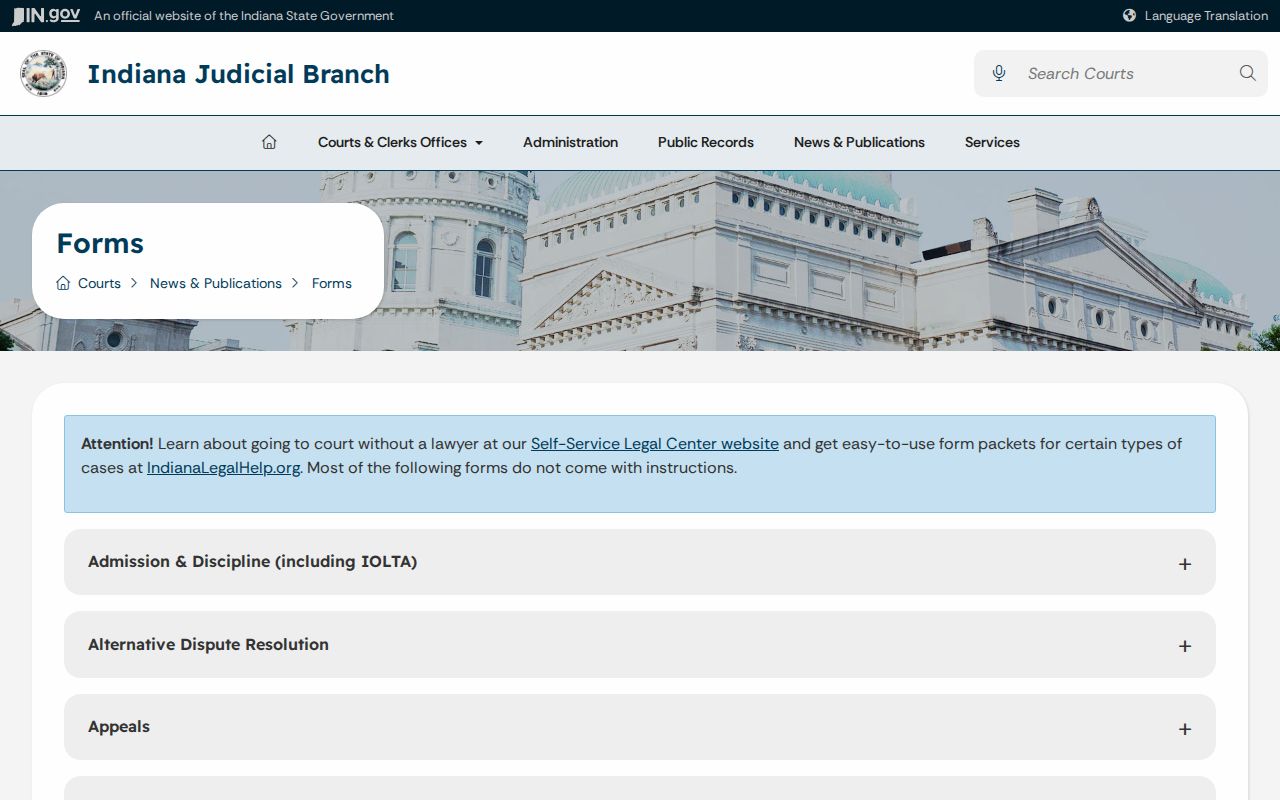
That forms collection can tell you what a filing type is called. It cannot confirm that a given form was actually filed in a particular Wabash County civil case, so it works best as a naming aid rather than a docket.
Public Access to Civil Dockets
Indiana's access rules lean toward openness. Access Rule 4 presumes that eligible court records are public. Rule 5 then lists what stays out. Rule 9 offers a route to request sealed material in extraordinary circumstances. The Indiana Access to Public Records Act in Title 5 covers many public agency records. The Indiana Rules on Access to Court Records govern court files themselves.
The state's Title 5 statute sets out those general public-record duties.
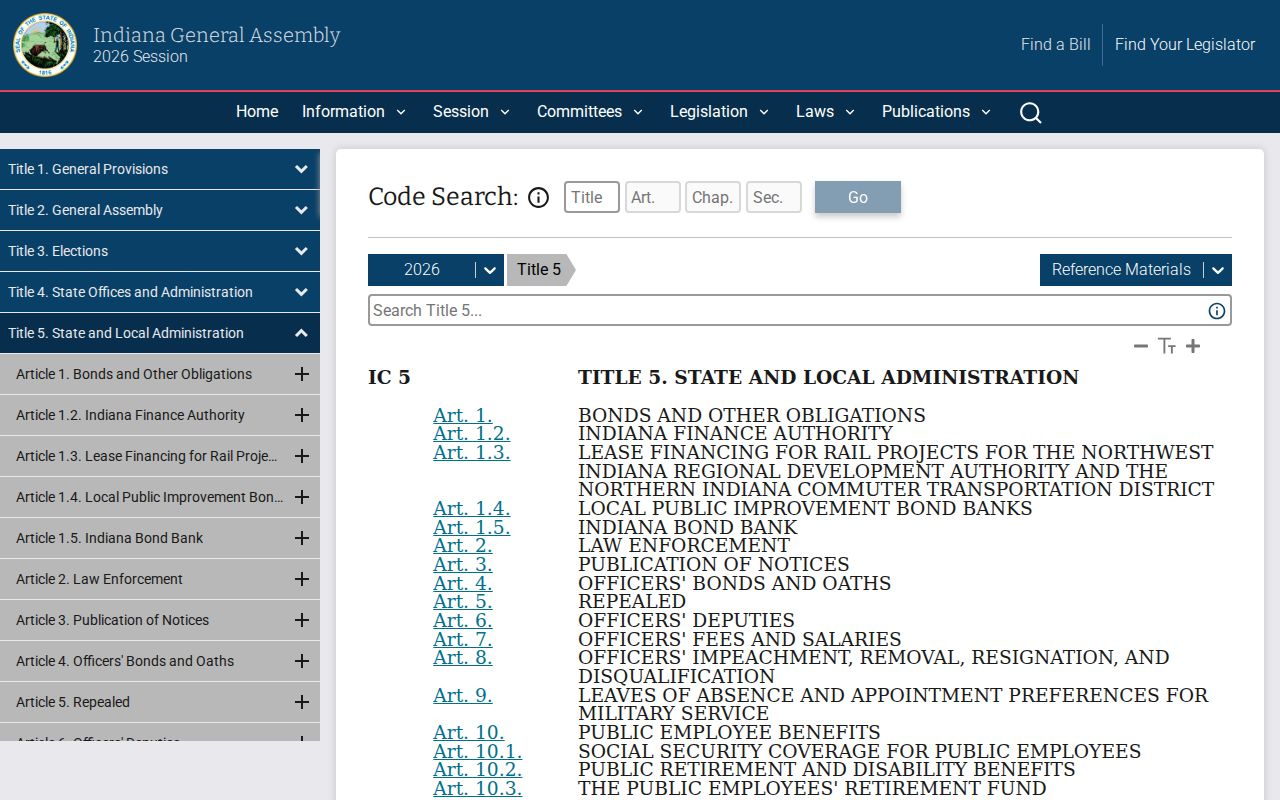
The distinction matters in practice. A request to a county office and a request to the court may reach different offices. Each may also run under different rules. Some civil docket material is restricted by law: protective orders, juvenile records, expunged cases, confidential personal data, and portions of family or mental-health files. A result missing from public view is not proof that no case exists. If something is sealed or redacted, ask the court or the Clerk about the lawful route in. Do not try to work around the restriction.
Certified Wabash Civil Copies
To order a certified copy of a civil filing or judgment, give the Clerk the case number exactly as displayed. Include the court, the document title, and its approximate filing date. Fees come from the state fee manual. Plain copies run no more than $1 per page, and certification adds $1 per document. A judgment transcript is billed differently, with a $3 amount listed in that manual. Verbatim hearing transcripts follow separate local page-rate rules set by the court.
Put any written request on paper carefully. State the record you want. Ask for the current fee, the accepted payment method, and the access status before sending money. Never send card numbers through ordinary email. If you still need the case number, the Wabash County case search can help you find it first.