
How to Search Criminal Dockets
Start at Indiana MyCase, the public face of the state's Odyssey court data. Pick Wabash County first. From there, search the Case, Name, Attorney, or Citation Number tab. If you have the case number, use it. It narrows a docket search to a single file. A name search can be tightened by court, status, file date, or case type when a common surname floods the screen. MyCase may throw up a captcha and cap broad result sets. Adding a first name, date range, or court helps a criminal docket search go smoothly.
- Choose Wabash County in the court filter.
- Enter the case number, name, attorney, or citation number.
- Open the matching Case Summary and check its court and status.
- Read the CCS for settings, filings, orders, and disposition events.
- Ask the Wabash Clerk for an official or certified record when needed.
The internet is not the only channel for Wabash County court records. The Wabash County Clerk serves records at the counter and by phone. Written requests also work by mail or email. Older criminal docket material may be harder to reach. It can take an office or library visit. Parties and attorneys may hold an authorized account. A party access code is not a public lookup tool.
Wabash Criminal Courts Compared
One elected Clerk serves both of Wabash County's trial courts. The local allocation rule offers a helpful first clue about venue, but the current Court field on a docket controls for any specific matter.
| Court | Identifier | General allocation |
|---|---|---|
| Wabash Circuit Court | 85C01 | Serious felonies generally begin here. |
| Wabash Superior Court | 85D01 | Misdemeanors and infractions generally begin here. |
| Wabash City Court | 85H01 | City ordinance and limited local matters use the city route. |
Level 6 felonies alternate between Circuit and Superior, with a twist: vehicle or watercraft Level 6 felonies land in Superior. A transfer order can shift a case off its expected path. North Manchester Town Court was abolished in 2012, so historical 85I01 is not a live filing destination for any Wabash County criminal case.
What a Criminal Docket Shows
A Wabash County Case Summary can show the case title, number, court, type, filed date, status, parties and their roles, charges, bonds, CCS events, documents, and financial information. Treat it as a convenience view. It does not promise that every older event or document appears.
| Charge | The allegation, statute, degree, offense date, and modification data when public. |
|---|---|
| CCS | The dated event log for filings, hearings, orders, and case movement. |
| Status | An Open or Closed label, not a full account of the result. |
| Documents | Public images made available online, which may be less than the complete file. |
| Financial block | Displayed amounts that the Clerk must confirm as a current official balance. |
The official layout keeps charges apart from the CCS and from orders. A charge is only an allegation. A scheduled hearing on the docket proves nothing about what the court decided.
Wabash Charges Need Context
Read the charge block next to the CCS and the signed judgment. A degree can change. One count may be dismissed while another moves ahead. Bond data speaks to release terms, never guilt. For the actual result, turn to the disposition event and its order. The Indiana court source shows the official Case Summary layout. A Wabash County reader will encounter it there.
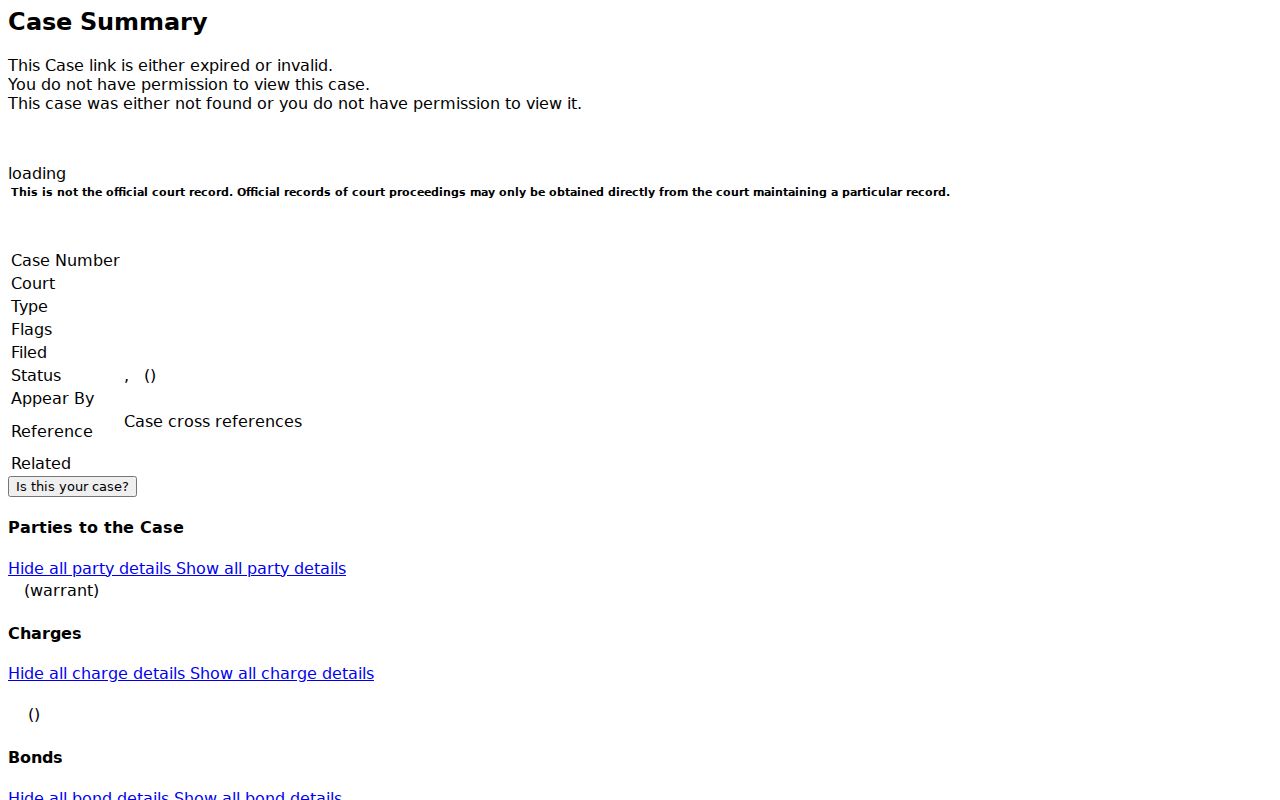
That view explains why the case header, charge area, CCS, and document area work as distinct parts of one Wabash County criminal court record rather than a single block of facts.
Key point: A charge label states what entered the docket. Only later public orders and the disposition show how the Wabash County case was resolved.
Stages on a Criminal Docket
A common Wabash County CCS path is Filing → Initial Hearing → Counsel Appearance → Pretrial Setting → Plea or Trial → Judgment → Sentencing → Compliance or Closure. Not every criminal docket follows each step, and labels vary with case type.
An initial hearing is just the start. A pretrial setting may cover discovery, motions, readiness, or scheduling. A plea entry is not sentencing, and a trial setting can move by later order. Even after judgment, probation, payment, or compliance events may keep the docket open. Read each entry by date. Chase the next order instead of treating one row as the whole record. Note: a calendar entry only proves a setting was scheduled. The later CCS event is the better source for what occurred.
Wabash Criminal Filing Scale
The official ICOR application counted 1,278 new criminal filings across all Wabash County courts in 2024. Misdemeanors led the way at 677. The count also included 294 miscellaneous criminal matters and 198 Level 6 felonies, along with smaller groups of other felony levels, post-conviction matters, and red-flag cases.
These figures measure docket activity, not people or outcomes. They cannot tell you whether a charge was proved, dismissed, amended, or resolved by plea. That context comes from the individual Wabash County CCS and judgment.
Which Court Holds Criminal Dockets
The Clerk of the Circuit and Superior Courts keeps the official county files. The Circuit Court page and Superior Court page identify the two tribunals. MyCase handles statewide public search. The Clerk issues certified copies and current balances. Traffic infractions follow a separate ticket route. They can still surface in a court summary. If 85H01 appears, confirm City Court files with that office. Federal criminal cases sit outside MyCase entirely. They belong to the federal court and its PACER system.
Missing Wabash Criminal Settings
A hearing that drops off the rolling calendar does not mean the case ended. Check the CCS for a continuance, reset, cancellation, transfer, or new order first. Then confirm with counsel or the court office. CourtCal covers only a limited date window, so a valid event may fall outside it. Wabash County legal notices run through the official county notice page, which shows the notice postings a reader can check directly.
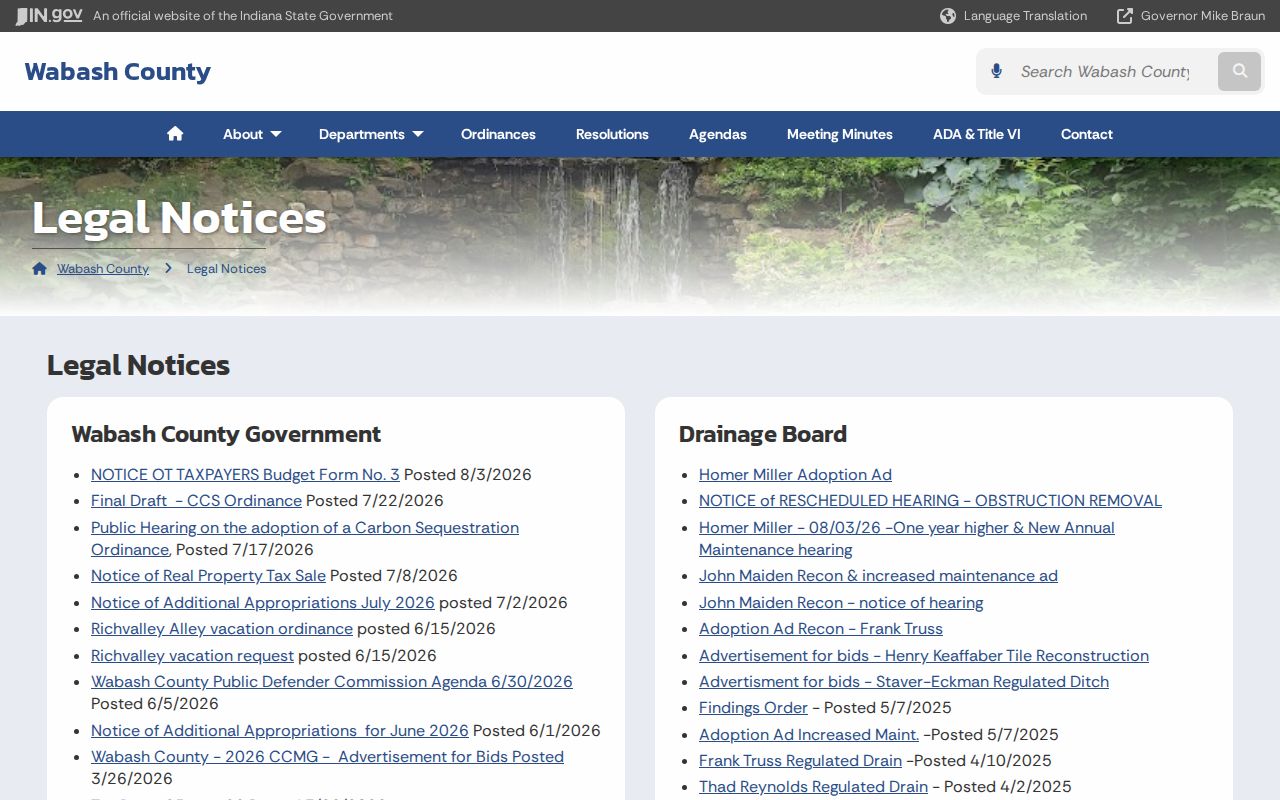
That notice source helps locate local rules and retention notices. It does not replace the CCS or prove that a specific file was destroyed.
Public Access and Sealed Criminal Dockets
Indiana opens its court records under Rule 4. That rule presumes public access to eligible case files. Two limits matter here. Access Rule 5 sets out the categories that stay confidential. Rule 9 offers a narrow request path for extraordinary circumstances. Access can also differ by channel. What you see remotely through MyCase is not always the same as what you can pull at the Wabash County Clerk's office. An index entry may be public even when the underlying image is not.
The full list of Rule 5 exclusions is spelled out in this Indiana rules source.
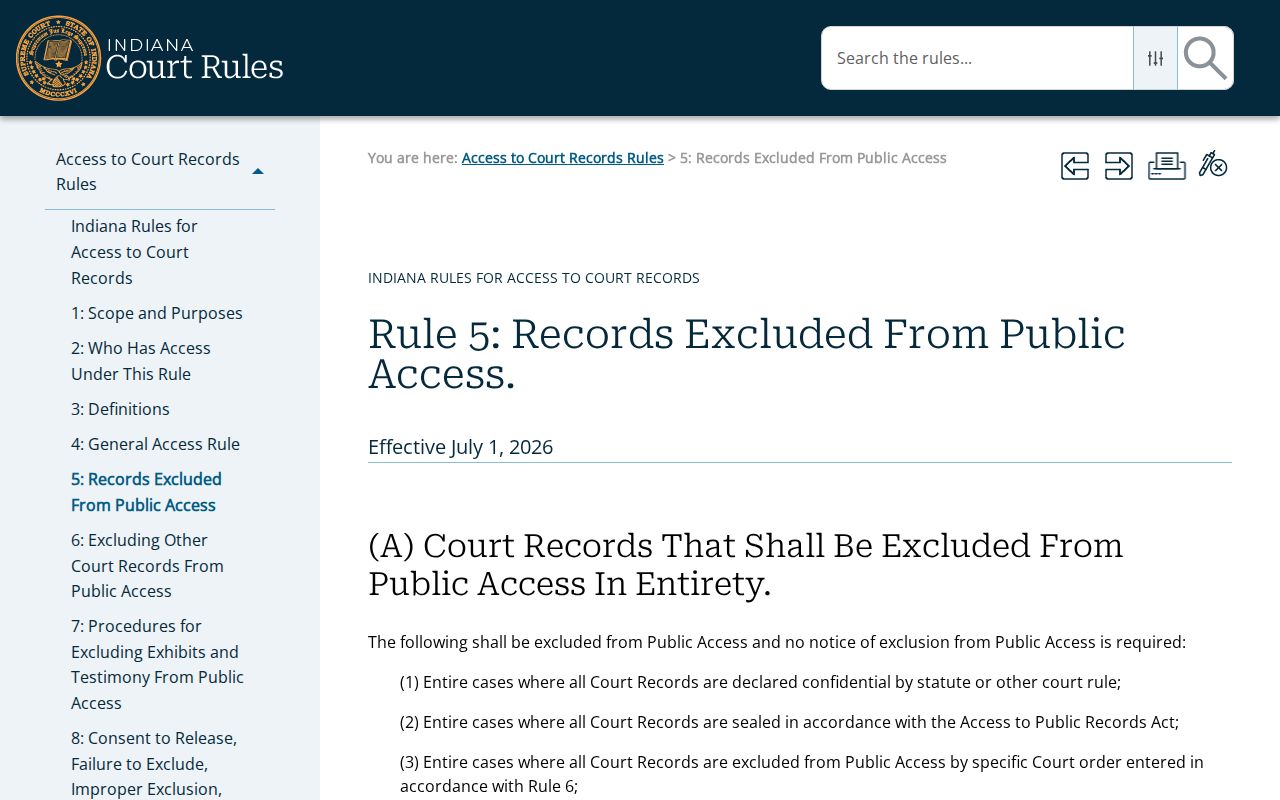
The rule exists because some criminal docket material is withheld by law. Juvenile cases, sealed files, and expunged records often drop out of view. Some arrive heavily redacted. That is expected behavior, not a sign the file is missing.
Juvenile dockets get the strongest protection. An expungement can block public access even if the paper itself still sits in storage. Details such as addresses, birth dates, and account numbers must never be republished once seen. If a lawful docket search comes back empty, take it at face value. No public result was returned.
Find Wabash Criminal Documents
MyCase may show a document icon, but old filings and some eligible records are not online. Note the exact Wabash County case number, court, document name, and approximate date. Contact the Clerk and ask whether it is available for inspection, a plain copy, or certification. Requests may also use the Clerk's mail or email research process.
A certified copy carries the custodian's authentication. A portal screenshot does not. The official file is the right source for proof of filing or an authenticated judgment. The broader Wabash County case search describes the MyCase fields used to locate the correct number before a request.
The Clerk's genealogy and research instructions ask for full names, other known surnames when relevant, an approximate year, the record type, and contact information. Those facts let staff separate similar records without requesting a broad file on a person. The research deputy is available only two or three days per week, so call before an in-person research trip. For a current criminal case, state whether the request concerns the docket history, a specific order, or a certified judgment. That clear scope helps the Wabash County Clerk identify the correct public product and quote the current cost.