
How to Search the Wabash Court Docket
One Wabash community runs its own municipal bench: the city itself. Wabash City Court operates under the identifier 85H01 in Indiana's Odyssey system. Its cases surface in the free Indiana MyCase portal with no account needed. Pick Wabash City Court there. That pulls up a city civil claim or an ordinance matter. Choose the Wabash County filter instead. Use it when the case is a county criminal, probate, family, or larger civil file.
- Open MyCase and select the Case, Name, or Attorney tab.
- Enter one case identifier, or enter a last name with useful narrow terms.
- Choose Wabash City Court for a city matter, or Wabash County for a county case.
- Open the Case Summary and read the Chronological Case Summary in date order.
- Confirm a date, balance, or copy request with the office that keeps the record.
Keep a few limits in mind when you run a docket search. Results cap out at 1,000. A captcha may pop up along the way. Filter by status, filing dates, or court to trim a long list. Feel free to drop hyphens or leading zeros from a case number. When a case never appears, it has a reason. It may be confidentiality, a sealed file, an age predating electronic data, or simply a different court.
Wabash City Court Uses 85H01
The official Odyssey court list shows Wabash City Court joined Odyssey on February 27, 2023. That date matters for docket hunting. Newer public entries tend to sit in MyCase. Older city files and unlinked documents may still require a call to the office. MyCase is a window into court data. It is not a certified copy and not the city's filing desk. The court number also clears up a frequent mix-up. Wabash Circuit Court carries 85C01, Wabash Superior Court carries 85D01, and Wabash City Court carries 85H01. Read the front of a case number before picking a filter. A transfer can give a case a new number. The MyCase search tips note that a case-number search checks number history too.
The Wabash Municipal Court
The municipal bench has an official name. It is Wabash City Court. Its City Court department page describes an office that handles civil cases and city ordinance violations. It also takes payments and runs hearings. Judge Timothy A. Roberts is listed in the state directory. You will find it at 23 W Market Street, Wabash, Indiana 46992. The phone number is 260-563-4946. That jurisdiction is far narrower than the Wabash County Clerk of the Circuit and Superior Courts' workload. For the city's own docket, payment, or hearing, call the city office first. County felonies, family matters, probate, and county civil files stay with Circuit or Superior Court. A Wabash police contact alone does not place a case in City Court. Go by the court name and identifier printed on the notice. Civil claims run up to $10,000 at the city level. Do not confuse that with small claims in the separate Wabash Superior Court. The forum named on a summons or claim notice tells you which office keeps the docket.
Wabash Court Office at Market Street
An online search cannot settle every Wabash city entry. Contact the Market Street office directly. Have the case number, the court name, and the party name as filed ready. Know the specific item you want. Ask whether the city record can be inspected, copied, or certified. Ask also whether any part is restricted. One caution: an event listed in the Case Summary does not guarantee a document icon online. For a direct view of this court's role, see the Wabash City Court page, the official city source on its work and schedule.
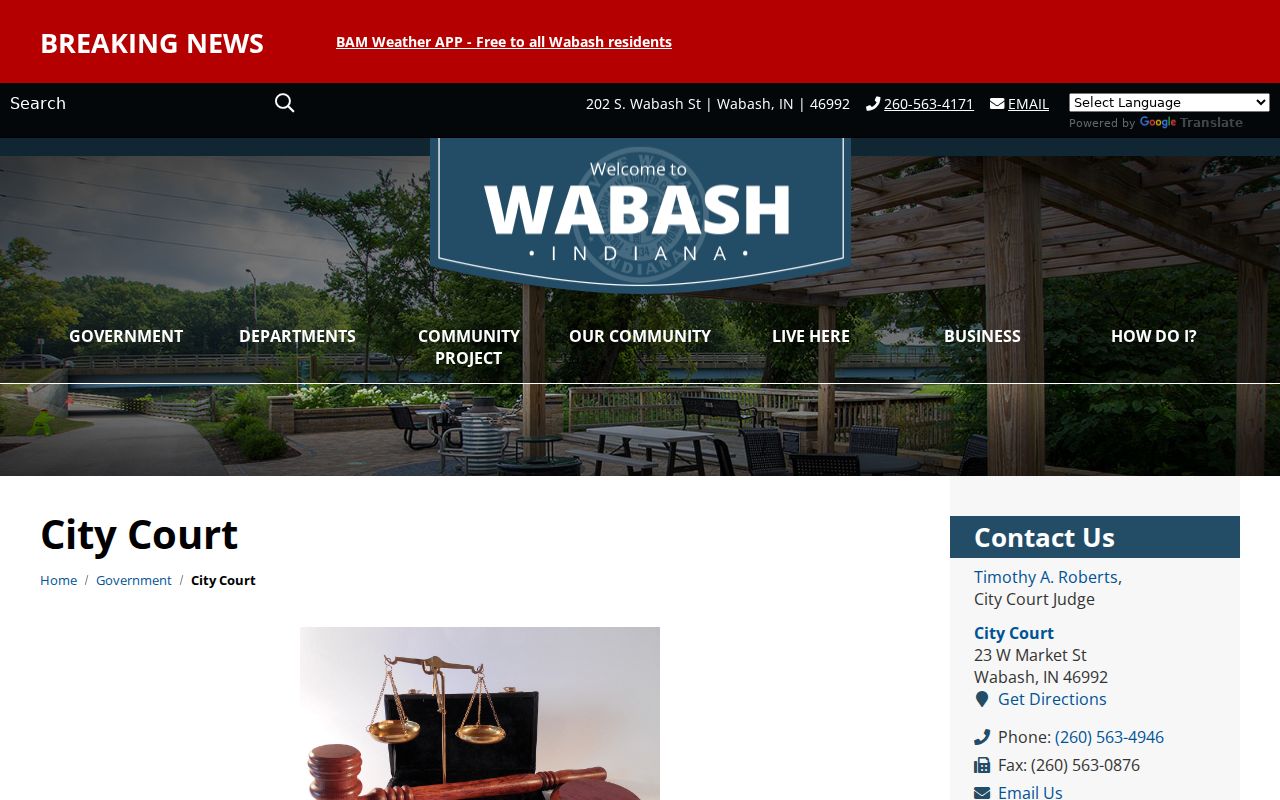
The office page grounds Wabash municipal questions in something concrete. It ties them to a named court, a real address, and a published hearing schedule rather than a generic county search.
Wabash Court Dates and Settings
Wabash City Court holds standing hearings on Tuesday and Wednesday at 8:45 a.m. That is the bench's regular rhythm. It is not proof your case sits on either day. Confirm the actual Wabash setting in the Case Summary. A notice or order also shows it. Whenever attendance matters, confirm with the city office as well. Keep two date traps in mind before you rely on the docket. A filing date is not a hearing date. An old CCS event is not the next setting.
| Date | The date assigned to the specific Wabash matter, not merely a regular hearing day. |
|---|---|
| Time | The listed start or docket-call time; confirm whether an individual time applies. |
| Courtroom | The Wabash City Court location or other place stated in the notice. |
| Judge | The judicial officer shown for that setting. |
| Setting Type | The purpose, such as an initial hearing, pretrial event, trial, or compliance setting. |
A reset reshuffles the schedule without erasing the case. Read the later CCS entries and the newest order to stay current. Indiana's separate Trial Court Calendar can help with county settings, though the city office remains the best source for a Wabash City Court date.
Tuesday Wabash Hearings at 8:45
Here is a Wabash-specific fact worth knowing: hearings run on Tuesdays and Wednesdays. That can help when a notice seems vague. Still, do not guess a date from the weekly rhythm. If the online case summary and the notice clash, call 260-563-4946. Give staff the case number, and skip broad name searches.
Want to watch from home? The statewide remote-hearing page shows which courts offer a live stream. A remote option does not mean every Wabash hearing airs online. The state promises no archive. The official interface makes one thing clear. Choosing a county is just the route to current live listings.
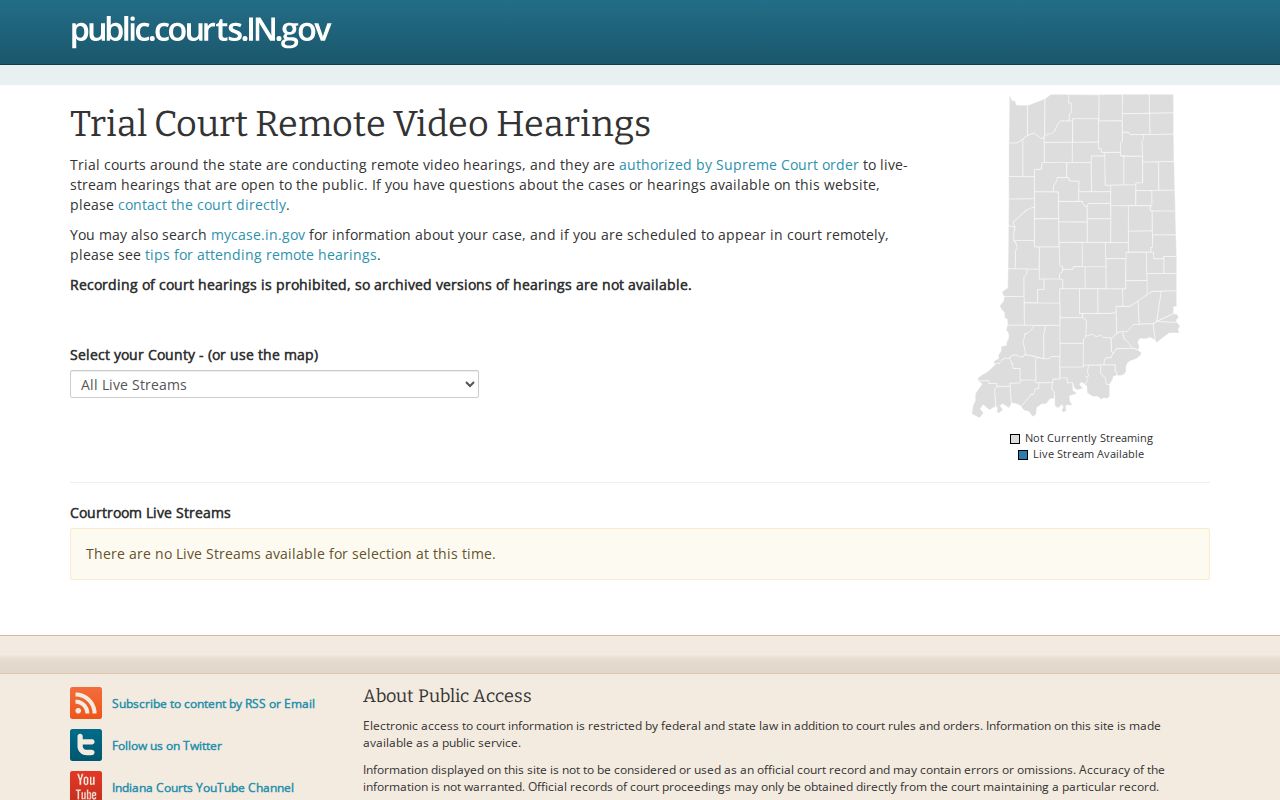
Rely on your hearing notice for instructions, and confirm access with the court itself. A public stream listing tells you what is viewable, not what you were ordered to attend.
Wabash Traffic Tickets
The portal takes a UTT number. It also accepts a driver-license number or a name and birth date, so you can look up a Wabash traffic ticket through the Indiana ticket payment portal. If that tool returns nothing, try MyCase next. Check the court name printed on the citation. It tells you whether the case sits with City Court or the county Clerk. Even after a docket search, compare your receipt with the court's current balance before assuming the ticket is settled.
Paying and fighting a ticket are separate paths. The Wabash County Clerk's traffic page sets payment due by the court date, while anyone disputing a charge should follow the response instructions on the ticket and contact the named court before that deadline passes. For the full county process, see Wabash County traffic court records. The page also explains how the court case differs from the BMV's driving-history file.
Wabash City Fee Conflict
Two official Wabash city sources give different filing fees for a civil claim. The current department page lists $157, yet an older FAQ lists $95. Do not simply pick the figure that looks more recent. Call City Court first. Ask for the current total and what it includes. Learn which payment methods are accepted, and any service cost, before you file.
Card payments carry a $1 fee up to $31. Above that, the fee is 3 percent, according to the city page. Those terms apply to the city office only. County cases move through different Clerk channels, such as MyCase or GovPay for certain obligations.
Before paying: Confirm the court, current balance, due date, fee, and case number with the Wabash office shown on the notice.
Where Wabash Cases End Up
Where something happened in Wabash does not decide which court takes the case. City civil claims and city ordinance matters can stay in Wabash City Court, while county criminal, probate, family, and other civil cases go to Circuit Court or Superior Court under local rules. MyCase lets you switch between city and county filters, though neither one is a catchall.
Docket flow: Wabash City Court › Wabash County Courts › Circuit Court and Superior Court
The county layer sits in one small cluster. The Clerk of the Circuit and Superior Courts works from 69 W Hill Street. The court offices themselves carry the numbers 49 and 59 W Hill Street. Before you drive to the civic and court complex, check the address printed on your notice. The right building saves a trip. Need the county search route? The Wabash County court docket overview walks through it step by step.
Wabash Filing Activity in Context
Numbers can give you scale without telling you anything about a person. Official 2024 statistics come from Wabash City Court. They count 347 collection entries, 36 eviction entries, and 45 ordinance entries in the activity categories cited. Read those as filing and activity counts, nothing more. A collection entry does not prove a debt was valid. An eviction entry does not mean the tenant lost. The same caution goes for an ordinance entry, which does not mean a judgment followed.
The state's ICOR statistics tool lets you pick a year, a county, a court, and a report type. The official page then returns aggregate filing totals for the selections you make.
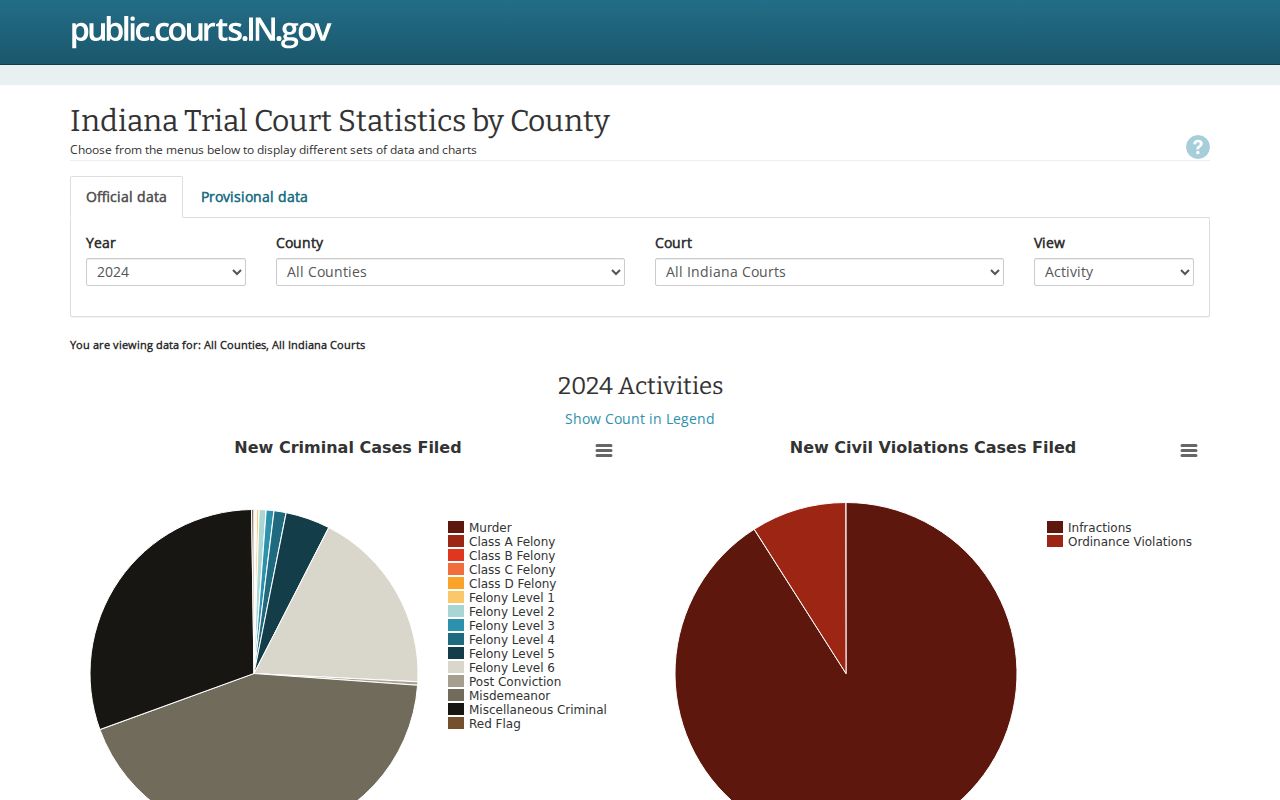
Keep the tools in their lanes. MyCase gives you a public case summary, while ICOR is only for broad civic context. Neither replaces the Wabash docket itself.
Wabash E-Filing Is Different
E-filing and docket searching are two separate things in Wabash County. Indiana's statewide system delivers pleadings and other filings straight to the court. It does not serve as the public docket. Lawyers in Wabash County must e-file. People without counsel are urged to use it, though no rule forces them. Who holds the official case file? The clerk remains the authority, and the public turns to MyCase once court data posts there.
The Indiana e-filing page covers service providers, training, and support. The official page lays out the filing side of the system.
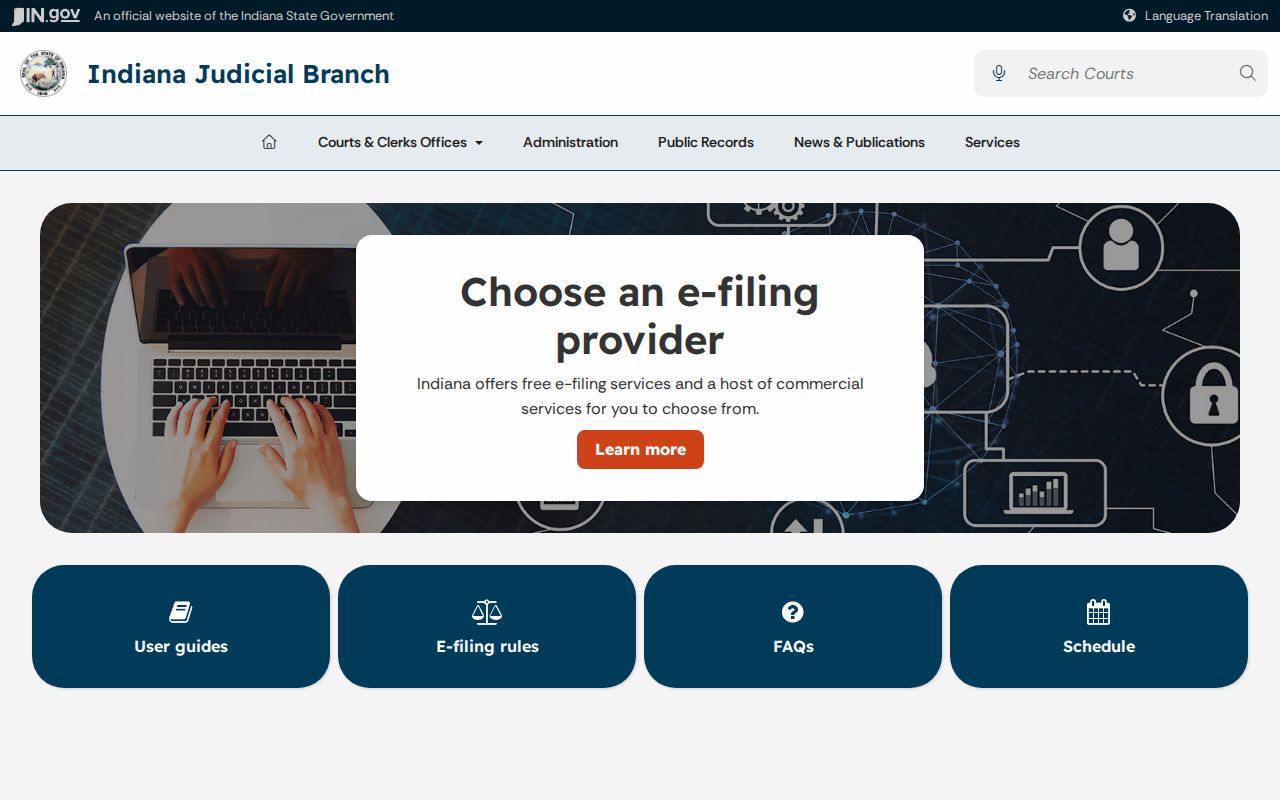
The state's how e-filing works page explains provider selection, submission, service, and notices.
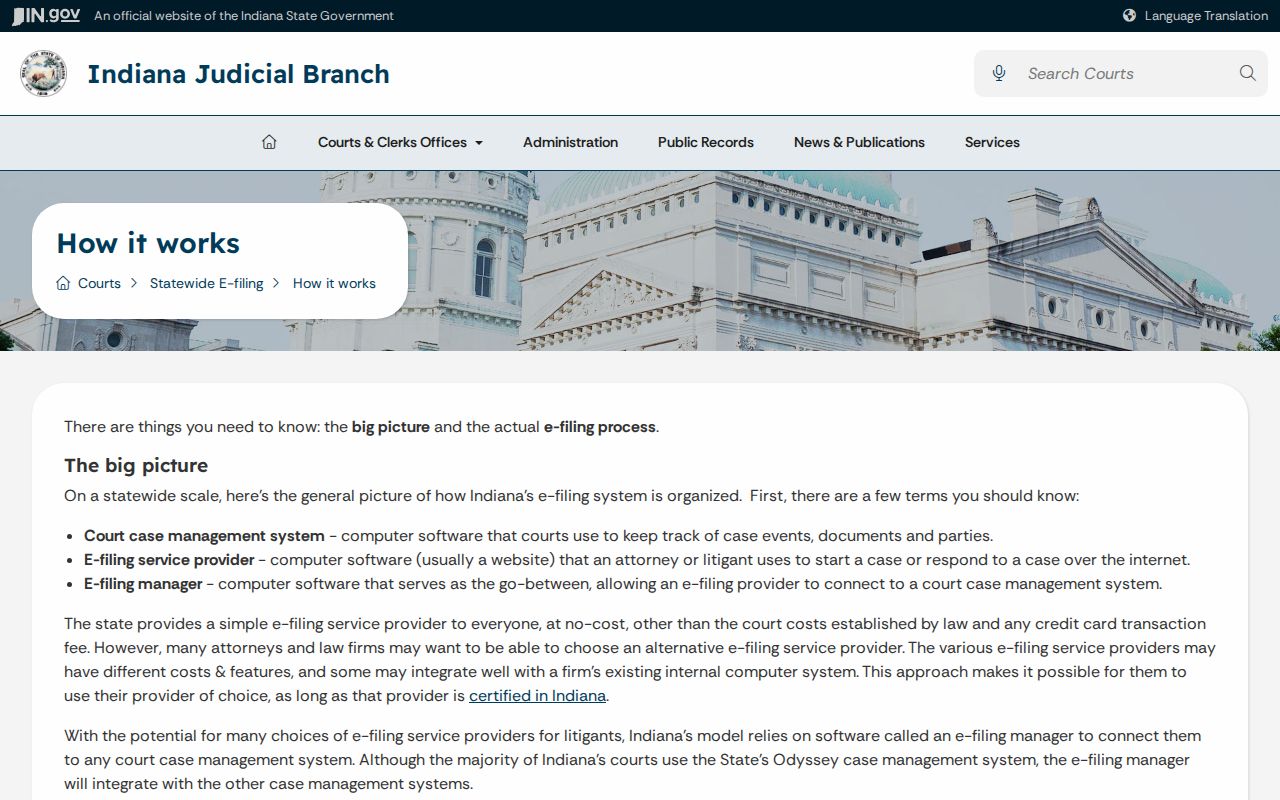
A confirmation only proves the document went through your chosen service. It is not the final Wabash CCS entry, and it does not fix the current hearing date on the court docket.
Wabash State Statistics Source
Court statistics for Wabash County come from the Indiana Judicial Branch, which releases annual and provisional trial-court reports. The trial and probation statistics page labels each set with its year and status.
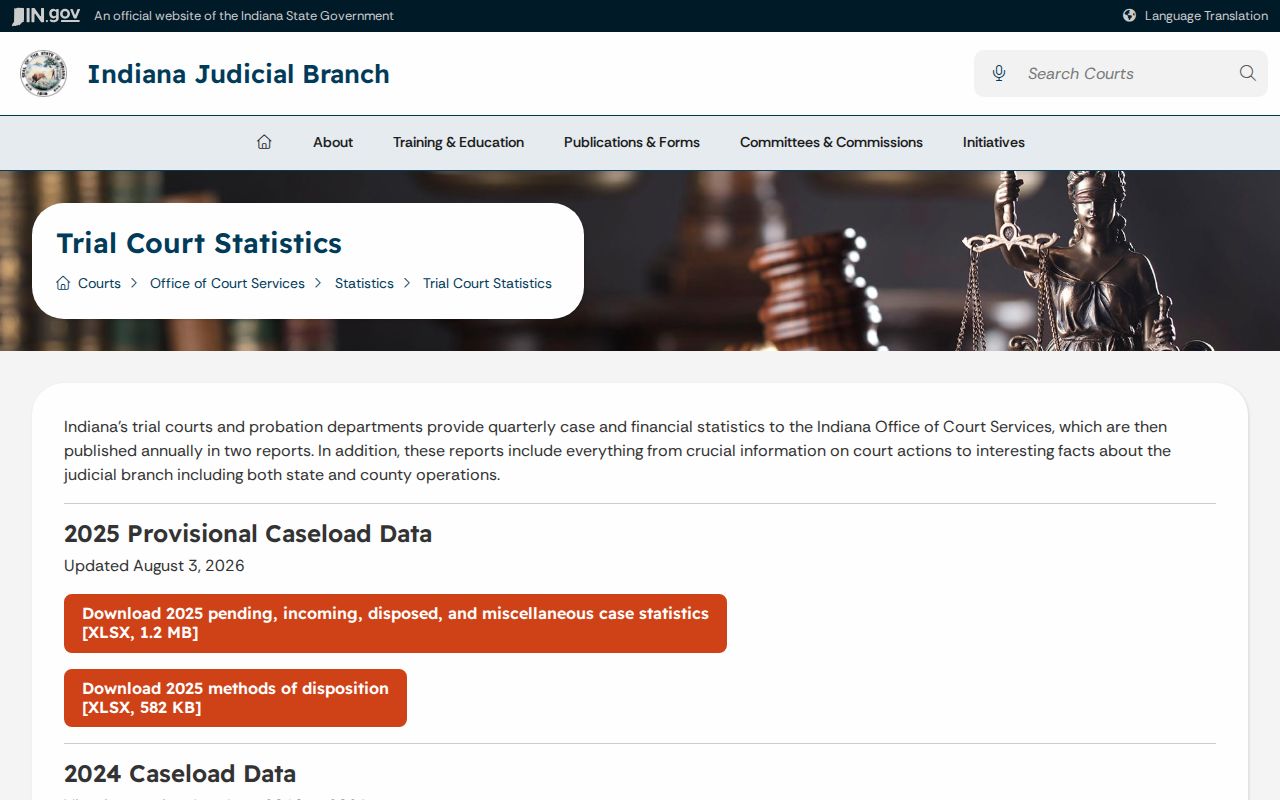
Always tag Wabash figures with their year and report scope. A statewide or county total is not City Court activity unless the source filter names that court.
Public Access to Wabash Court Records
Indiana treats court records as open by default. Access to Court Records Rule 4 builds in that presumption. It holds unless a specific rule carves something out. Rule 5 is where the carve-outs live. It lists categories that stay confidential. Juvenile matters, mental-health filings, protection orders, sealed cases, and expunged records all face tighter limits under those rules. One wrinkle catches people off guard. A case may appear as a public docket entry while the document behind it is withheld from the online file. For Wabash City Court records, direct your request to that court itself. The county Clerk handles the files for Circuit and Superior Court.
Key Rules:
Access Rule 4 states Indiana's basic public-access presumption.
Access Rule 5 identifies records excluded from public access.
Access Rule 9 provides a court process for certain extraordinary requests involving excluded records.
Want a plain or certified copy? Give the clerk enough detail to identify the exact item. A public MyCase screen can carry errors, leave out old data, or show no image at all, so the Wabash court that holds the record is still the place to verify it.